Democracy Shield: What Is It and How Can We Use It?
During the first day of the 14th POINT Conference at Sarajevo’s Dom mladih, representatives of civil society, European institutions and the research community discussed how the European Democracy Shield could strengthen democratic resilience in the EU and candidate countries, as well as the mechanisms needed to respond to disinformation and other threats to democratic and electoral processes.
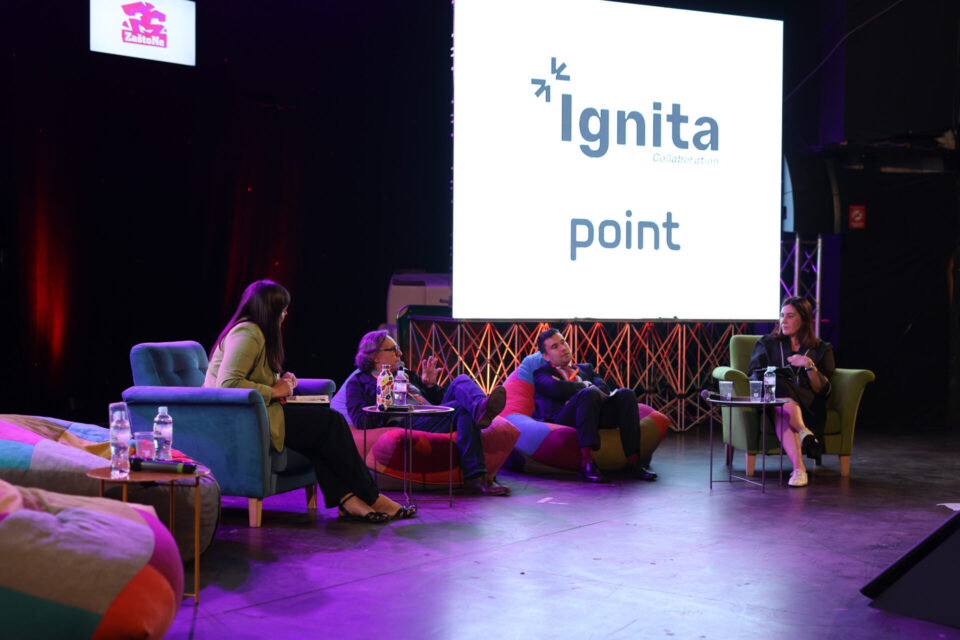
The European Democracy Shield has become one of the European Union’s flagship initiatives for strengthening democratic resilience, responding to threats and protecting electoral and democratic spaces, said panel moderator Maida Ćulahović from Zašto ne.
The discussion focused on the close connection between the information spaces of the European Union and candidate countries.
One of the central issues was the Digital Services Act (DSA). While the DSA is mandatory for EU member states, candidate countries are not currently expected to adopt it. This creates a paradox: they face many of the same digital and democratic threats as EU members but do not have access to the same protection, accountability and enforcement mechanisms.
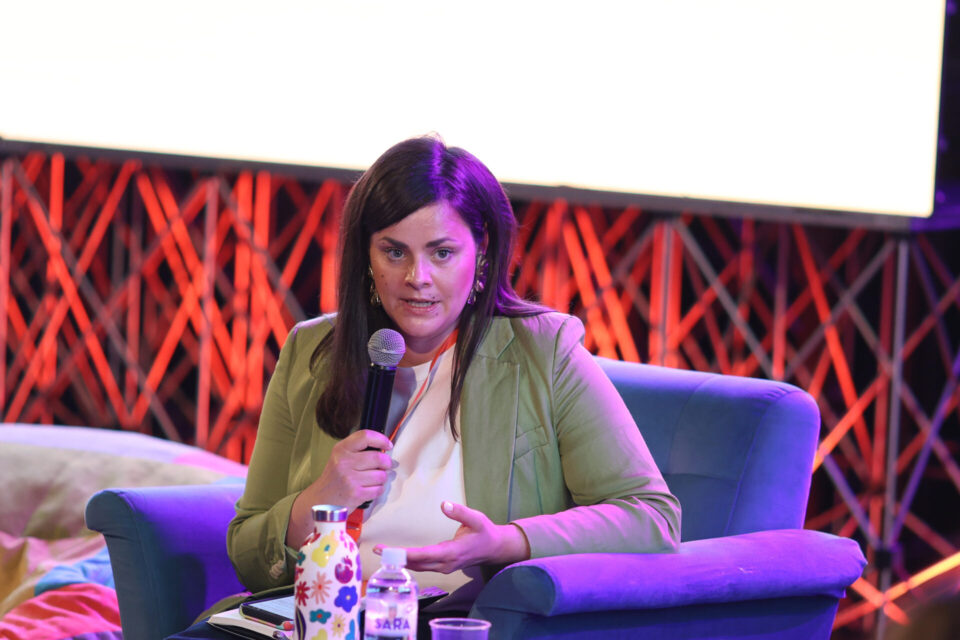
Tjaša Feher, EU advocacy manager at EUCRTA, welcomed the return of enlargement to the EU agenda and the recognition within the Democracy Shield that democratic resilience is part of Europe’s wider security architecture. She emphasized the need for a coordinated, whole-of-society approach involving institutions, independent media, civil society, researchers and citizens. However, she questioned how candidate countries would be included in the new mechanisms.
“To me, one of the central questions remains this: How will the candidate countries and civil society organisations in the candidate countries be, at the end of the day, included in these mechanisms?” Feher said.
She also warned that threats to democracy in the Western Balkans are not exclusively external. Political pressure, institutional capture and governments that fail to uphold European values can pose an immediate threat to civil society and independent media. She called for stable operational funding rather than short-term project-based support, especially in countries where governments do not consistently uphold democratic standards.

Paolo Cesarini, Chair of the European Digital Media Observatory and Program Director at the School of Transnational Governance at the European University Institute, described the Democracy Shield as an action plan that connects existing legislative and policy initiatives.
“I don’t think that Democracy Shield is a radical innovation in terms of policy. It is an increment of innovations, it improves what already existed before,” Cesarini said.
Its main value, he explained, lies in strengthening cooperation and connecting existing capacities. He highlighted the proposed European Centre for Democratic Resilience, which could serve as a forum for different authorities to exchange information and coordinate their work, although it would primarily cover EU member states.
Cesarini also pointed to the need for more structured dialogue between institutions, researchers and existing infrastructure. Another important element is support for democratic institutions, independent media and spaces for civic debate. Democratic discussion, he warned, cannot remain entirely dependent on commercial social media platforms.
Some cooperation mechanisms are already open to candidate countries. EDMO integrates regional hubs, produces monthly situational reports and conducts narrative and structural analyses of disinformation. It also carries out cross-platform investigations, which are increasingly important because manipulative narratives often move between social networks, traditional media and political communication.
Haris Avdić Pejičić from the European External Action Service said there was a clear understanding within the EU that disinformation and foreign interference do not distinguish between member states and candidate countries.
He noted that the EU has gradually developed more standardized guidelines for dealing with disinformation and platform regulation. However, the Digital Services Act remains highly complex, and even EU member states face difficulties in implementing it.
Policymakers in Brussels, he said, are aware that candidate countries face serious threats and that malign foreign actors continue to exploit political divisions and support disinformation ecosystems that benefit local political regimes.
Referring to Montenegro and the ambition of further enlargement by 2028, Avdić Pejičić expressed hope that progress by one candidate country could encourage reforms elsewhere.
“I really hope that Montenegro’s accession ignites a set of best practices amongst other candidates that allow for closer completion of the acquis and closure of the chapters,” he said.
He added that disinformation has increasingly become part of European security policy over the past six years, bringing greater political attention and more funding. Still, the ultimate gatekeeper of any piece of information remains the citizen, which represents both a responsibility and a democratic opportunity.
Author: Ivana Vučetić / Photo: Almin Tabak
(point.zastone.ba)