Can We Protect Democracy?
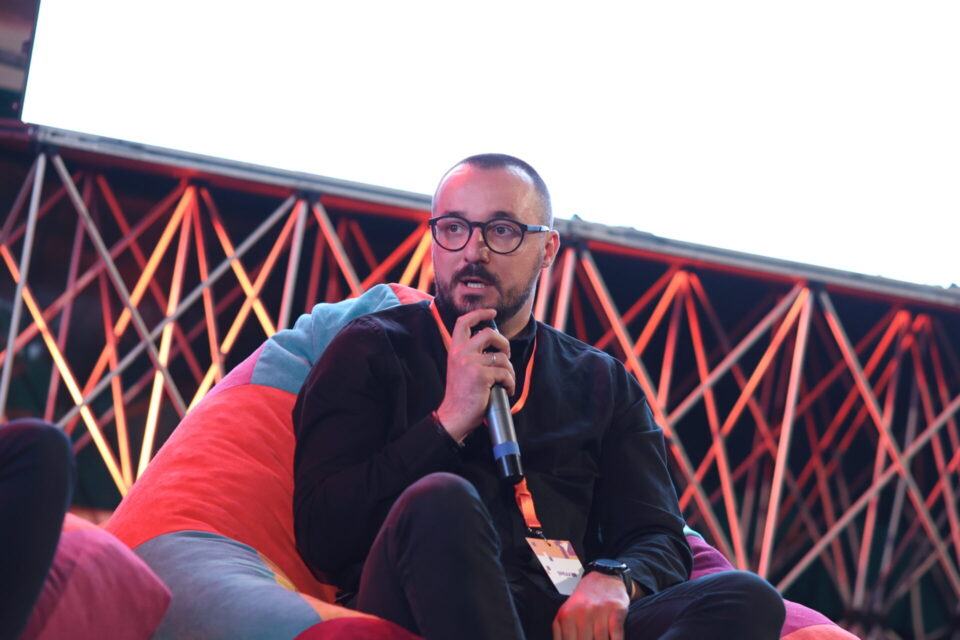
The panel “Elections in 2026: Can We Protect Democracy?”, organized in partnership with Friedrich-Ebert-Stiftung and moderated by Darko Brkan from Zašto ne, brought together journalists and civic actors from Slovenia, Hungary, Serbia, Bosnia and Herzegovina and Moldova to discuss how elections are challenged by disinformation, surveillance, foreign interference, institutional capture and voter manipulation.

Filip Dobranić from Danes je nov dan opened with Slovenia’s recent elections and the case involving Black Cube, a private intelligence company. He described how anonymously published videos, based on secretly recorded and selectively edited conversations, entered the campaign and were amplified before their origin and context were properly established. Dobranić warned that civil society, media and citizens reacted “like amateurs”, giving too much visibility to content whose provenance was unknown. His message was that even smaller countries which consider themselves safe can become targets of sophisticated foreign interference.
Hanna Solti from Átlátszó connected this with Hungary, where government-critical civil society actors and journalists had previously been targeted by covert operations and surveillance. She recalled the Pegasus spyware scandal and the pressure exerted through Hungary’s Sovereignty Protection Office, which labelled Átlátszó as a foreign agent. Speaking about the most recent elections, Solti emphasized the importance of documenting manipulation on the ground, especially in rural and segregated communities, where intimidation, food distribution, and vote buying were used to influence voters. Elections, she stressed, are not only about counting votes but also about whether citizens believe the process is transparent and fair.

Sofija Popović from the Centre for Contemporary Politics focused on Serbia, where regular presidential elections must be held by spring 2027 and parliamentary elections by the end of 2027. She said the next elections could be decisive for Serbian democracy. If the current government remains in power, Serbia could move into an even more authoritarian phase; if opposition forces led by students win, the country could begin the process of “decapturing” institutions and society. Popović identified violence, vote buying, voter migration, pressure on voters and a captured media landscape as the main challenges.
Enes Hodžić from BIRN BiH spoke about Bosnia and Herzegovina ahead of the October 2026 general elections. He described the early elections in Republika Srpska as a kind of test ground and warned that the country faces a contested legal framework, disputes over the authority of the Central Election Commission and potential problems with new election technologies. In the information space, he expects campaigns aimed at undermining Bosnia and Herzegovina’s European path, the legitimacy of the CEC and the role of the international community, with influence coming both from abroad and from domestic actors connected to regional political networks.
Alina Radu from Ziarul de Gardă shared the Moldovan experience as a warning about how democratic rights can be abused. She explained how Russia allegedly built networks to pay people who usually do not vote, financed signature collection and campaign activities for several parties, and moved money through cash, bank applications and other channels. Radu stressed that defending democracy means caring about every right before it is corrupted or misused.
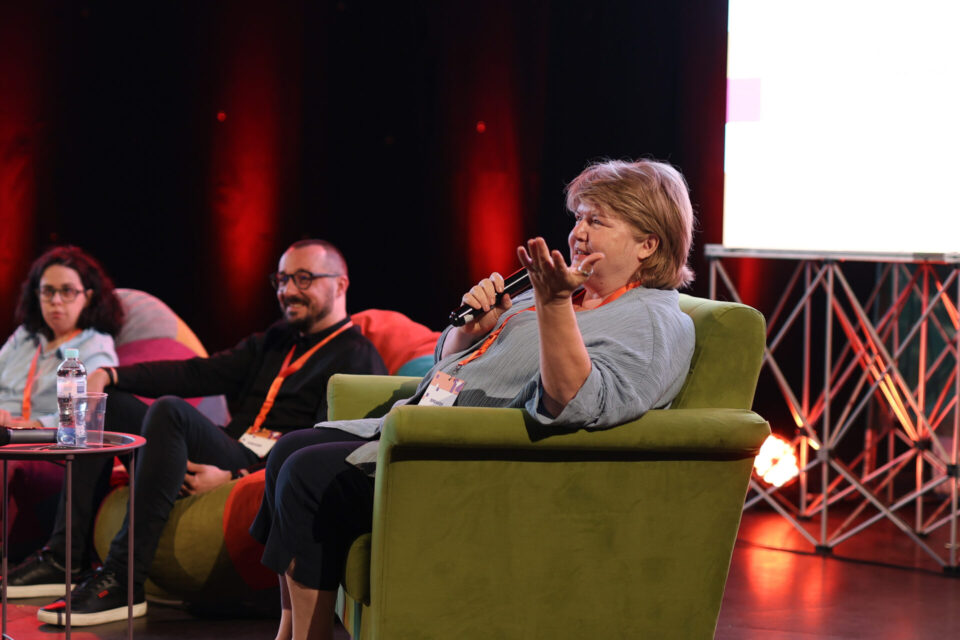
In the final discussion, speakers agreed that protecting democracy requires more than reacting to attacks. It requires civic organization, election monitoring, public pressure on institutions, independent journalism, and constant work with citizens, especially those who feel politics does not concern them. It ended with a shared message: democracy does not disappear overnight, but is weakened step by step; it can survive only if citizens, media, and institutions refuse to take it for granted.
Author: Biljana Livančić / Photo: Almin Tabak
(point.zastone.ba)