The Anti-Immigrant Region: Fear, Prejudice and Politics
A panel discussion at the 14th POINT Conference examined the implications of the European Union’s New Pact on Migration and Asylum for the Western Balkans, focusing on migration governance, border externalization, migrant workers and growing anti-immigrant sentiment across the region.

Panel “The Anti-Immigrant Region: Fear, Prejudice and Politics” on the second day of 14th POINT Conference brings together researchers, activists, journalists, trade union representatives, and civil society experts to examine how anti-immigrant sentiments are produced and sustained in the region. Session was moderated by Nidžara Ahmetašević, a Bosnian journalist, independent scholar and activist, with following speakers: Hope Barker, an independent researcher and investigative journalist specializing in migration, border policies and the human consequences of migration; Ljupka Mandić Kelijašević, a sociologist and activist whose research focuses on migration and readmission processes; Petar Đukanović, a human rights advocate and researcher with extensive experience in migration, asylum and European integration; and Višnja Katalinić, a trade union organizer and labor rights advocate from Croatia working on migrant workers’ rights.

Opening the discussion, Nidžara Ahmetašević reflected on the uncertain future of the Western Balkans within the European migration framework. She raised concerns that countries in the region could increasingly become destinations for people returned from EU member states through readmission agreements and newly established return mechanisms. Ahmetašević pointed to ongoing challenges in Bosnia and Herzegovina, including the situation in the Lipa reception center and reports of illegal pushbacks at EU borders. She also questioned whether public discussions about migration pay sufficient attention to developments across the entire region. She further highlighted the lack of organized representation for migrant workers in most Western Balkan countries, noting that Croatia remains the only country where migrant workers have established a union in our region.
Providing an overview of the EU’s New Pact on Migration and Asylum, Hope Barker explained that the new framework officially enters into force from this day and introduces significant changes to the European asylum and migration system. Barker discussed new screening procedures at external borders, accelerated asylum processes, and mechanisms designed to redistribute responsibility among EU member states. She also highlighted concerns surrounding so-called “legal non-entry spaces,” where asylum seekers may be processed before formally entering EU territory.
The discussion also addressed the increasing use of biometric technologies and artificial intelligence tools in migration governance. Barker noted that authorities are now relying on facial recognition technologies and automated systems as part of border management procedures. Particular attention was given to the pact’s return mechanisms and the concept of return hubs. Barker explained that under emerging arrangements, migrants may be transferred to third countries without having any previous connection to them.
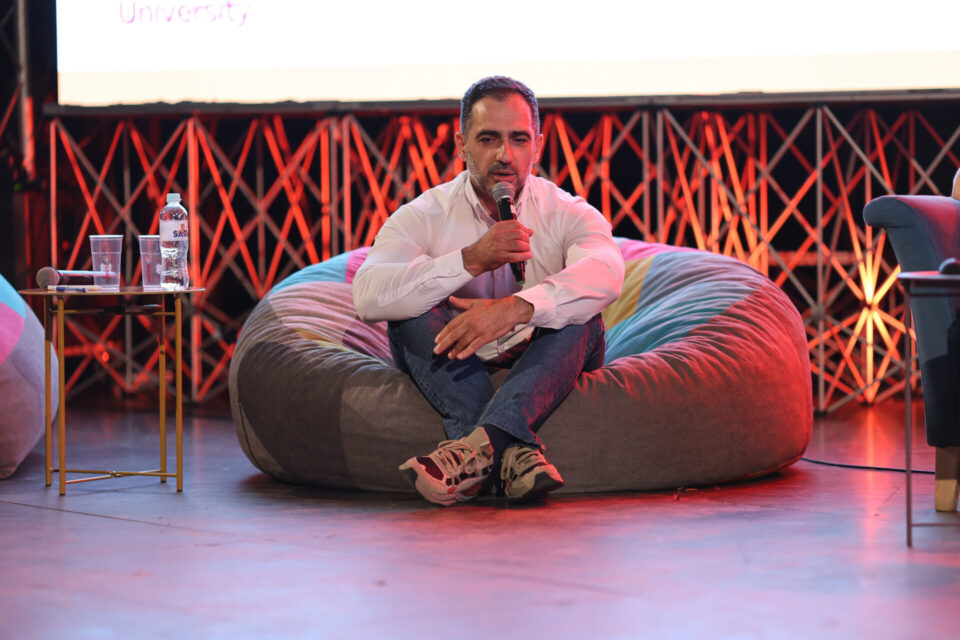
“In the past, there had to be some form of connection, whether family ties or knowledge of the language,” she explained.
“Now that requirement is changing.”
Barker also referred to examples such as Italy’s cooperation with Albania and broader efforts to externalize migration management beyond EU borders. She argued that migration debates increasingly reveal inconsistencies in how different European states apply standards and protections.
Ljupka Mandić Kelijašević focused on the implications of the pact for countries outside the European Union. She argued that the new framework is primarily concerned with improving the efficiency of migration procedures within EU member states while paying considerably less attention to the consequences for neighboring countries. According to Mandić Kelijašević, many of the measures promoted under the pact represent a continuation of efforts to externalize migration management and border control responsibilities. She also discussed challenges related to migration data in Serbia, noting that reliable information on migrant workers remains limited. At the same time, she emphasized the importance of improving communication between local communities and migrants.
“Migrants are human beings,” she said, arguing that migration policies should focus not only on administrative procedures but also on social inclusion and community engagement.
Offering the perspective from Montenegro, Petar Đukanović explained that migration issues often receive less public attention in his country despite becoming increasingly significant. While Montenegro remains primarily a transit country and receives relatively few asylum applications, he noted that migration infrastructure has expanded in recent years, including the establishment of new reception facilities. Đukanović also highlighted the growing presence of migrant workers in Montenegro and the challenges associated with their integration. Referring to a recent incident that sparked anti-migrant protests and xenophobic rhetoric, he argued that migration-related issues are frequently exploited for political purposes.
“Hate speech became very visible, while the institutional response was quite lean,” he said.
He further emphasized the lack of comprehensive data on migration and migrant workers in Montenegro, making it difficult to fully understand emerging trends and challenges.
Discussing developments in Croatia, Višnja Katalinić noted that anti-immigrant protests have generally remained limited and have failed to attract broader public support. At the same time, she pointed to numerous examples of solidarity initiatives led by civil society organizations, religious communities, healthcare workers, and local residents. Katalinić argued that Croatia still lacks a comprehensive integration policy for migrant workers. Language courses and support programs are largely organized by non-governmental organizations rather than public institutions, while dedicated integration centers remain absent. She also highlighted the growing polarization of public discourse around migration and minority issues. Referring to recent political and cultural controversies, Katalinić warned that anti-Muslim sentiment often exists beneath broader expressions of xenophobia. The situation escalated after a concert of a far-right musician in Zagreb last autumn.
Discussing labor migration, she noted that migrant workers are not directly affected by many provisions of the new EU pact. However, she warned against growing distinctions between migrants considered economically beneficial and those seeking international protection.
“There is an unfortunate divide between so-called good migrants and bad migrants,” she said.
The discussion concluded with questions from the audience concerning the categorization of migrant workers and the future impact of European migration policies on the Western Balkans. Speakers agreed that while migration governance is increasingly shaped by decisions made at the European level, countries throughout the region continue to face significant challenges related to integration, transparency, data collection, and the protection of migrants’ rights.
“Because migrants are humans, we are all migrants at some point in our life.” Ahmetašević concluded.
Author: Rijalda Ramusović / Photo: Almin Tabak
(point.zastone.ba)