Too good to be true: The Scam Economy
Online scams have evolved into a sophisticated global industry that exploits technology, human psychology and regulatory gaps. This was the central message of the panel “Too Good to Be True: The Scam Economy,” held at the POINT 14 Conference, where fact-checkers and investigators from Georgia, Bosnia and Herzegovina, Spain, and Kazakhstan shared their experiences uncovering fraud networks and protecting citizens from increasingly complex scam operations.

The panel was moderated by Ivan Subotić, Editor-in-Chief of FakeNews Tragač (Serbia). The discussion highlighted how scams transcend borders, adapt quickly to new technologies and often operate faster than authorities and platforms can respond.
Nino Bakradze of ISFED (Georgia) presented findings from one of the largest investigations discussed at the panel: a leak containing nearly two terabytes of data from scam call centers operating in Georgia. According to Bakradze, journalists gained unprecedented insight into the internal workings of these organizations through access to live chats, call recordings, and internal communications. The material revealed not only the techniques used to deceive victims across Europe and Canada, but also the mindset of the scammers themselves.
“We could see how they approached victims, how they treated them, and even how they celebrated every successful scam,” Bakradze said.

The investigation found that a relatively small operation employing around 85 people generated approximately $35 million in profit over two and a half years by convincing victims to invest in fake cryptocurrency and asset-trading platforms. Across multiple interconnected companies, the estimated losses reached $275 million.
Although the investigation triggered action from Georgian authorities and led to the freezing of assets, Bakradze noted that many of the identified scammers remain free and some operations continue to function.
Representing the Bosnian fact-checking platform Raskrinkavanje, Amar Karađuz spoke about a different type of scam starting with misleading Facebook posts promising valuable prizes. Users are lured by fake competitions advertising shopping vouchers, smartphones, or cash rewards. After following a series of links, victims unknowingly subscribe to premium SMS services that generate recurring charges through their mobile phone bills.
“People only realize they have been scammed when they receive a much higher phone bill at the end of the month,” Karađuz explained.
His investigation highlighted the role of telecom operators, which facilitate the billing process. While operators argue that users technically consent through terms and conditions displayed in small print, critics question whether such consent is meaningful when people are initially misled by fraudulent advertising. Karađuz added that despite complaints and evidence gathered by journalists, authorities have shown limited willingness to investigate these schemes, leaving many consumers without refunds or legal protection.
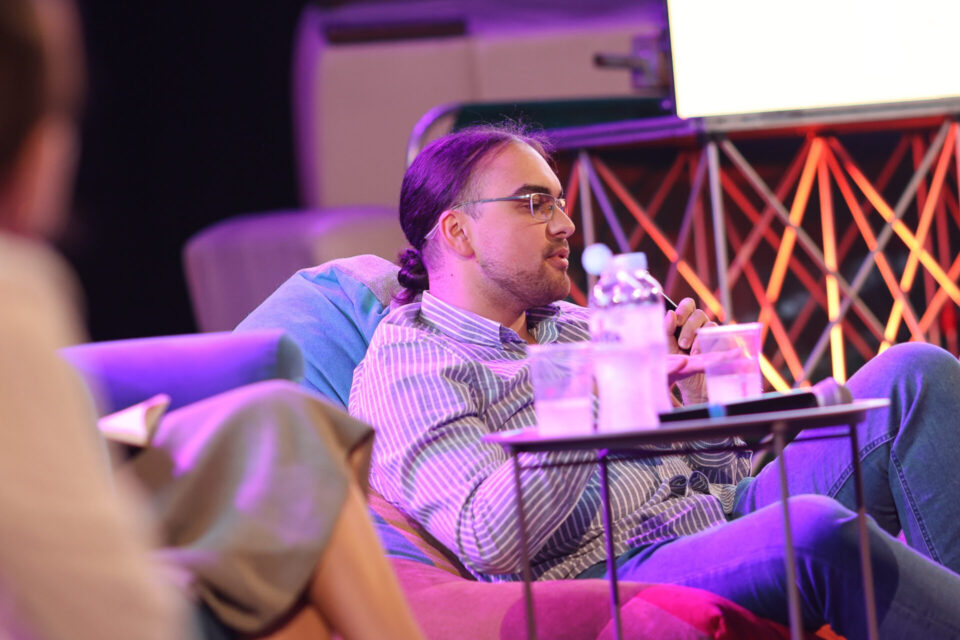
Marina Sacristan Hidalgo, Public Policy Officer at the Spanish fact-checking organization Maldita, described their multi-layered approach to combating online scams. A key component is Maldita’s chatbot, through which citizens report suspicious messages, fake investment schemes and fraudulent advertisements. These reports not only help individual victims but also allow researchers to identify broader patterns and expose coordinated campaigns.
“Everyone can fall for a scam”, Hidalgo said.
“There is a scam for everyone.”
Beyond public education, Maldita works to translate evidence gathered from users into policy recommendations aimed at regulators and online platforms. Hidalgo argued that scams often provide a useful entry point for advocacy because financial fraud is less politically polarizing than broader disinformation debates. She also highlighted the role of the European Union’s Digital Services Act (DSA), which creates new obligations for large platforms to address illegal content and systemic risks.
Moldir Utegenova of MediaNet from Kazakhstan explained that while scams in Central Asia resemble those found in Europe, they often heavily rely on impersonating trusted institutions. She described multi-stage fraud schemes in which victims receive calls from fake delivery services, followed by supposed bank representatives and even individuals posing as security officials. By creating a convincing narrative and exploiting trust in institutions, scammers pressure victims into transferring funds to so-called “safe” accounts.
“Scammers create a very convincing story around you, so you really start to believe it,” Utegenova noted.
MediaNet has responded through nationwide awareness campaigns, educational materials, and cooperation with public institutions.

A recurring theme throughout the discussion was the responsibility of social media companies. Hidalgo presented findings from a Maldita investigation showing how Meta’s verification system helped legitimize thousands of fraudulent advertisements. Scammers used verified accounts to impersonate public figures and promote fake investment opportunities.
“Scams are all about credibility,” she said.
“These platform features increase credibility and make it easier for people to fall for them.”
Karađuz noted that many scam campaigns remain active even after being reported to the platforms.The low cost of creating new pages and automating content production allows fraudsters to quickly replace accounts that are removed.
In the final part of the discussion, panelists agreed that international cooperation has become essential. Scam networks routinely operate across multiple countries, target victims in different languages, and relocate operations when exposed. Bakradze noted that some call centers investigated in Georgia later moved their operations to other regions, including Central Asia. Hidalgo stressed that local expertise remains crucial for identifying scam narratives tailored to specific audiences, while cross-border networks help connect the dots between seemingly separate campaigns.
The panel painted a clear picture of a global scam economy that is becoming increasingly professional, scalable and technologically advanced. While journalists, fact-checkers, and civil society organizations continue to expose fraud and educate the public, the speakers agreed that responsibility cannot rest solely on their shoulders. Stronger action from technology platforms, more effective law enforcement, better international cooperation, and sustained digital literacy efforts will all be necessary to counter an industry that adapts faster than most institutions. It was emphasized that scammers collaborate across borders every day, and that those fighting them must do the same.
Author: Elma Murić / Photo: Almin Tabak
(point.zastone.ba)