Western Balkans at a Digital Crossroads: Sovereignty, AI and Rights
Researchers and digital-policy experts from Albania, Bosnia and Herzegovina and the wider region discussed whether the Western Balkans can build meaningful digital autonomy while navigating EU integration, limited institutional capacity and competing foreign influence. Their presentations showed that legislation alone is insufficient without regulatory readiness, reliable data, accountable institutions, and citizens capable of understanding and defending their rights in the digital environment.
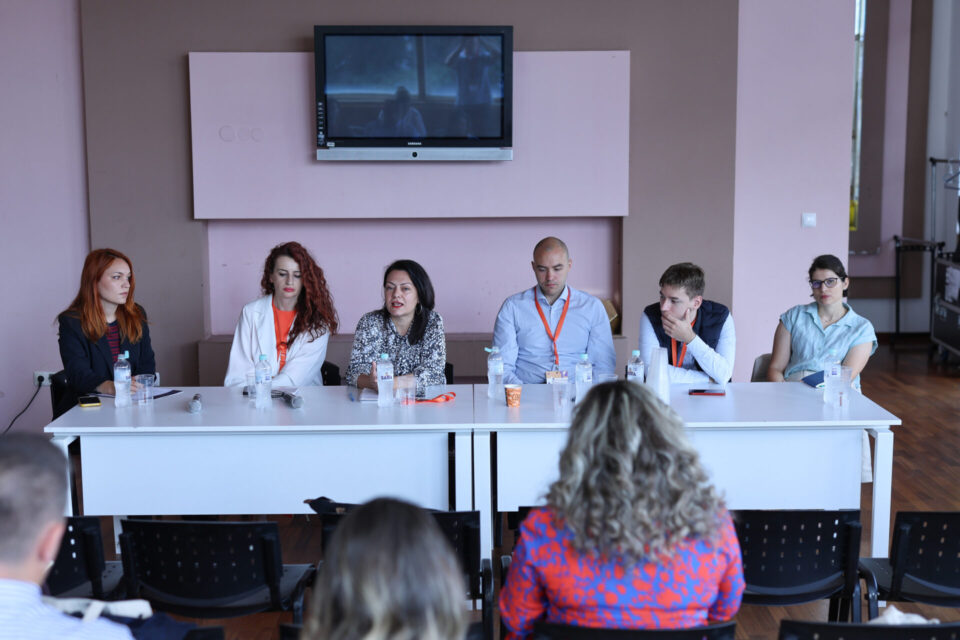
Oliana Sula from Aleksandër Moisiu University of Durrës examined whether the Western Balkans are moving towards digital sovereignty or deeper technological dependency. She argued that the region is caught between EU integration aspirations, United States influence and continued cooperation with Chinese technology providers. Serbia has developed the strongest links with Chinese technology, followed by Montenegro and Bosnia and Herzegovina, while Albania and North Macedonia have limited that presence more strongly, yet the main challenge is not only geopolitical positioning. Western Balkan governments frequently adopt legislation under external pressure or by copying EU models but lack the institutional capacity and coordination needed for long-term implementation. Sula described North Macedonia and Kosovo as highly donor-dependent, Montenegro as constrained by limited capacity, Bosnia and Herzegovina by fragmented governance, and Serbia as balancing between the EU, China, and Russia. She concluded that regional autonomy requires investment not only in laws but also in infrastructure, innovation and citizens’ digital readiness.
Albana Hana, an independent human-rights researcher affiliated with REWI at the University of Graz, addressed the right to mental privacy and freedom of thought. She warned that these rights are often taken for granted, particularly in Western Balkan societies facing prolonged democratic transition and weak institutional safeguards. Digital platforms already collect and process vast amounts of personal information, while emerging neurotechnologies may increasingly infer emotions, reactions and cognitive states. Citizens often do not know what data is collected, how it is processed or where it ultimately goes. Hana stressed that legal protections usually develop more slowly than technology and, even when rules exist, implementation remains weak. The debate over creating new rights specifically for mental privacy remains divided, partly because of concerns about an inflation of legal categories. However, she argued that the essential issue is citizens’ awareness and agency: without the ability to protect the private space of thought, meaningful autonomy, civic participation, and democratic activism become increasingly difficult.

Nasir Muftić from the Faculty of Law at the University of Sarajevo and Milan Vujić from the Erste Foundation presented research on how EU candidate countries can align with the expanding digital acquis. They identified a structural gap: the EU has adopted a wide range of digital rules, including the DSA, DMA, AI Act and EMFA, but these frameworks are primarily designed for member states, and there is no coherent pre-accession model for candidates. As a result, neighbouring countries may choose very different or even opposing approaches. North Macedonia, for example, is considering several separate laws, while Montenegro has discussed a lex specialis approach. The researchers classified EU rules according to their governance model, national relevance and need for pre-accession implementation, noting that regulations such as the GDPR require broad domestic structures, while others rely heavily on centralized EU enforcement. Their proposed methodology assesses governance type, national priority, and expected accession timeline, allowing each candidate country to decide what should be implemented immediately, adapted gradually or left until membership.
Digital Policy Analyst Alba Brojka focused on the use of artificial intelligence in Albania’s public procurement system. Although Albania has presented itself as a digital trailblazer, including through the high-profile role given to the AI system Diella, Brojka warned that political ambition has moved faster than the country’s legal, technical, and institutional preparedness. Albania’s procurement legislation permits AI use without clearly defining where it should be applied, what public benefit it should produce or who is accountable when systems fail. Poor or incomplete public data further raises questions about how reliable systems can be trained, while biased datasets may reproduce discrimination rather than remove it. Drawing attention to international examples such as Ukraine and Brazil, she argued that Albania has not yet developed a similarly clear implementation path. Transparency, human oversight, trained public officials and mechanisms for identifying and correcting failures must therefore come before the large-scale use of AI in public decision-making.

The discussion showed that the region’s digital future will not be secured through formal alignment alone. Whether dealing with foreign technology providers, AI-assisted public procurement, neurotechnology or EU regulation, the same weaknesses repeatedly emerge: inadequate capacity, fragmented institutions, poor-quality data, limited accountability and gaps between adopted rules and their enforcement.
Author: Ivana Vučetić / Photo: Almin Tabak
(point.zastone.ba)